THE DOURO VALLEY
Douro Valley Without a Car
How to Visit by Train, Tour, Taxi and Boat
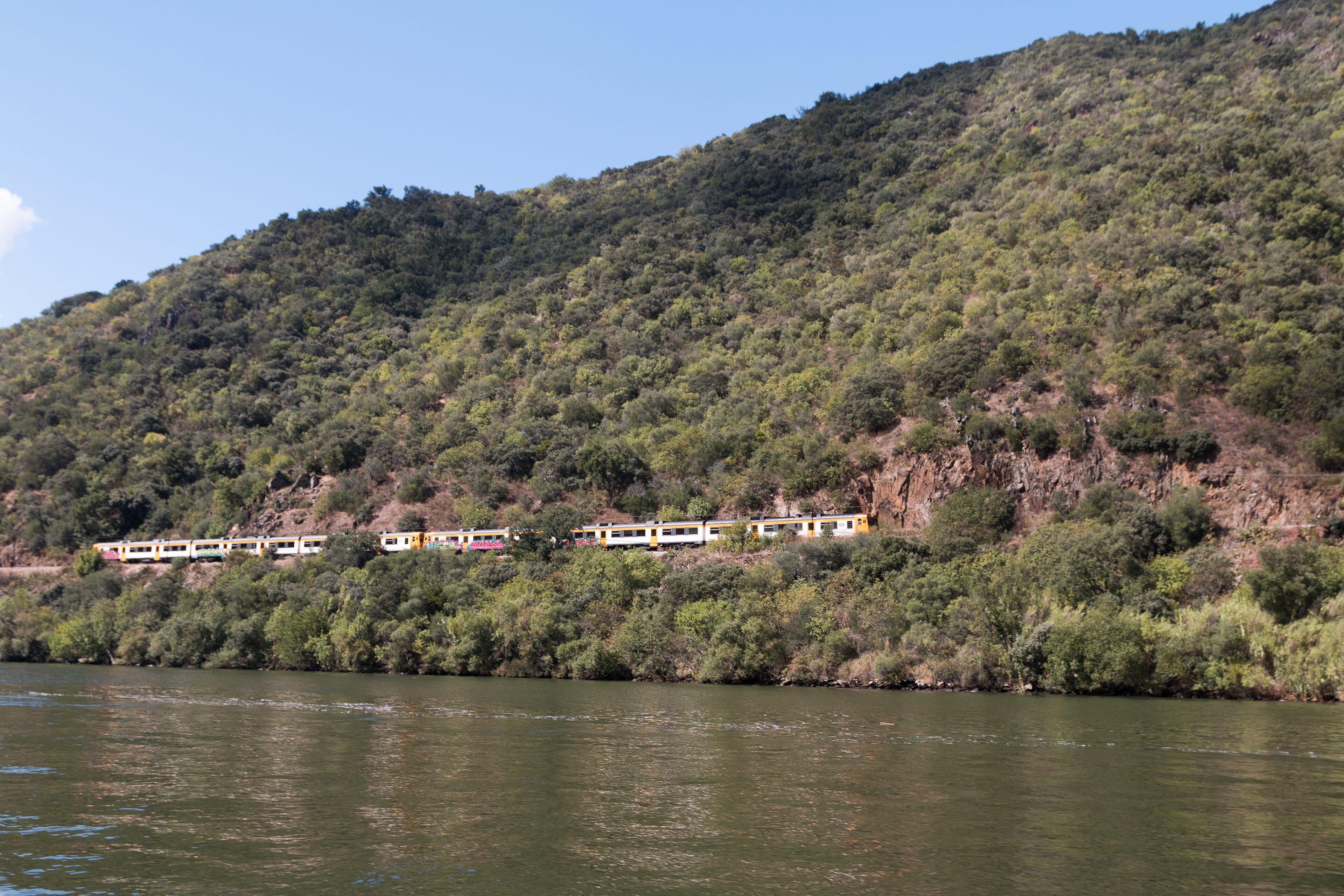
You do not need to rent a car to experience the Douro Valley.
In fact, for some travelers, leaving the car behind can make the trip more enjoyable.
The train from Porto follows the Douro into the wine region, passing through Peso da Régua and continuing to Pinhão and farther into the valley. The journey itself becomes part of the experience as the landscape changes from the outskirts of Porto to steep vineyard-covered hillsides along the river.
But there is an important distinction:
Getting to the Douro Valley without a car is relatively easy. Getting around the Douro Valley without a car requires more planning.
The wineries, viewpoints, restaurants and villages that make the Douro special are spread across a large, steep landscape. Some are convenient to the railway. Others are not.
The solution is not necessarily to arrange more transportation.
It is to build the right kind of Douro trip.
The Short Answer
If you are visiting the Douro without a car, there are three practical approaches:
Take the train and concentrate your time around Pinhão.
Take the train and arrange transportation to selected wineries or accommodations.
Join an organized Douro Valley tour from Porto.
Each creates a different experience.
The best choice depends less on how much of the Douro you can cover and more on what you actually want from your day or overnight stay.
Option 1 — Take the Train to Pinhão and Keep the Trip Simple
For an independent traveler who does not want to rent a car, Pinhão is one of the easiest places to build a Douro visit around.
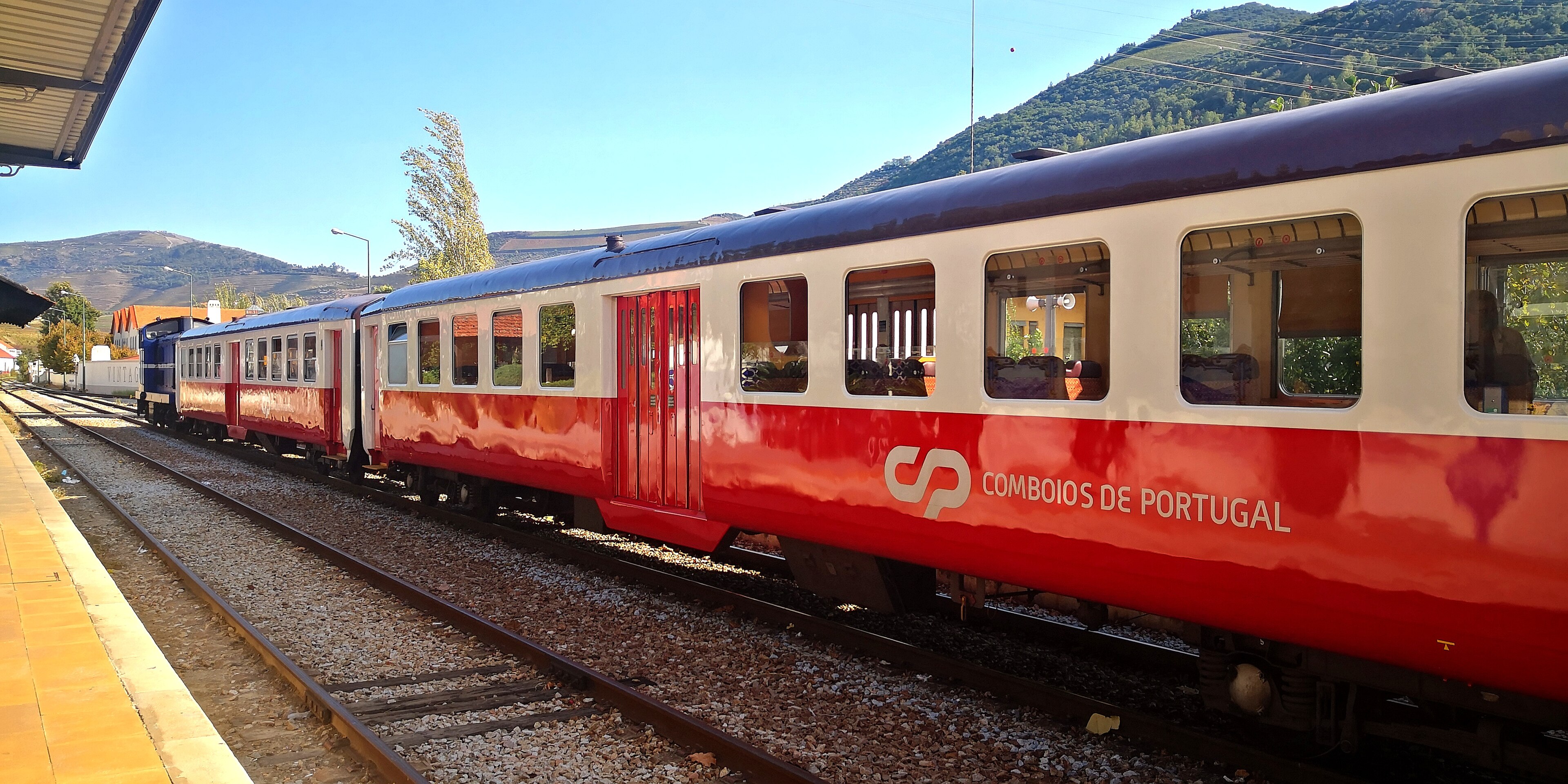
The Douro Line connects Porto with Pinhão, and the railway journey is part of the attraction. Pinhão's historic station, with its tile panels depicting vineyard life and regional scenes, is itself one of the town's recognized sights.
Once you arrive, make Pinhão the center of the day.
Walk the riverfront.
Choose one wine experience that works with your transportation.
Have a relaxed lunch.
Spend some time on the river.
Then return to Porto—or stay overnight and continue the following morning.
This approach works because it replaces distance with experience.
Best for
Travelers who enjoy independent travel, scenic train journeys and a slower day.
It is particularly well suited to someone visiting the Douro for the first time who would rather experience a few things properly than spend the day moving between them.
The tradeoff
You will not have the freedom to reach every quinta, viewpoint or village that interests you.
That is not necessarily a problem.
The Douro is one of those places where seeing less can sometimes mean experiencing more.
Option 2 — Take the Train and Arrange Transportation in the Valley
The train can also be the first part of a more ambitious Douro visit.
Travel to Pinhão or Régua and arrange a taxi, private transfer or pickup for the experiences that are difficult to reach independently.
This can work especially well when there is one particular winery, restaurant or hotel that matters to you.
Instead of renting a car for the entire trip, you use transportation only when you actually need it.
This works especially well for an overnight stay
Suppose you want to stay at a vineyard quinta outside Pinhão.
You might take the train from Porto, arrange transportation from the station to the property, spend the afternoon and evening at the estate, and arrange your return transportation the following day.
With two days rather than a few hours, the transfers no longer dominate the itinerary. You have time to enjoy the property, wine country and river landscape without continually watching the clock for the return to Porto.
Plan the return before you arrive
Do not assume that transportation will work the same way it does in a large city.
If a winery or accommodation is outside town, ask about transfers when making the reservation.
For an important lunch or tasting, arrange transportation in advance rather than figuring it out after you arrive.
A little planning can make a car-free Douro stay feel remarkably simple.
Option 3 — Take an Organized Tour From Porto
For travelers who want to see several parts of the Douro in a single day, an organized tour can be the simplest solution.
Transportation is handled for you, and many tours combine some mixture of wineries, lunch, viewpoints and river experiences.
That eliminates one of the hardest parts of visiting the Douro without a car: coordinating transportation between places that were never designed to function as a compact sightseeing circuit.
Best for
Travelers with only one day who want several organized experiences without managing the logistics themselves.
It can also make sense when wine tasting is the priority.
The tradeoff
You give up some independence.
Your day follows someone else's schedule, and you may spend more time moving as a group than you would if you designed a simpler day yourself.
Neither approach is inherently better.
They are simply different Douro experiences.
Why Pinhão Works Particularly Well Without a Car
Pinhão occupies an unusually useful position for a car-free traveler.
It sits directly on the Douro Line and is surrounded by the vineyard landscape most travelers have come to see. Its historic railway station has itself become one of the region's recognized visitor stops.
You can arrive somewhere that already feels like the Douro rather than arriving at a transportation point and immediately needing another ride.
That matters.
For a traveler with limited time, every transfer consumes part of the experience.
Pinhão allows you to reduce those transfers.
It also gives you access to the river, which provides another way of seeing the valley without a car.
Don't Forget the River
The train is not the only useful transportation in the Douro.
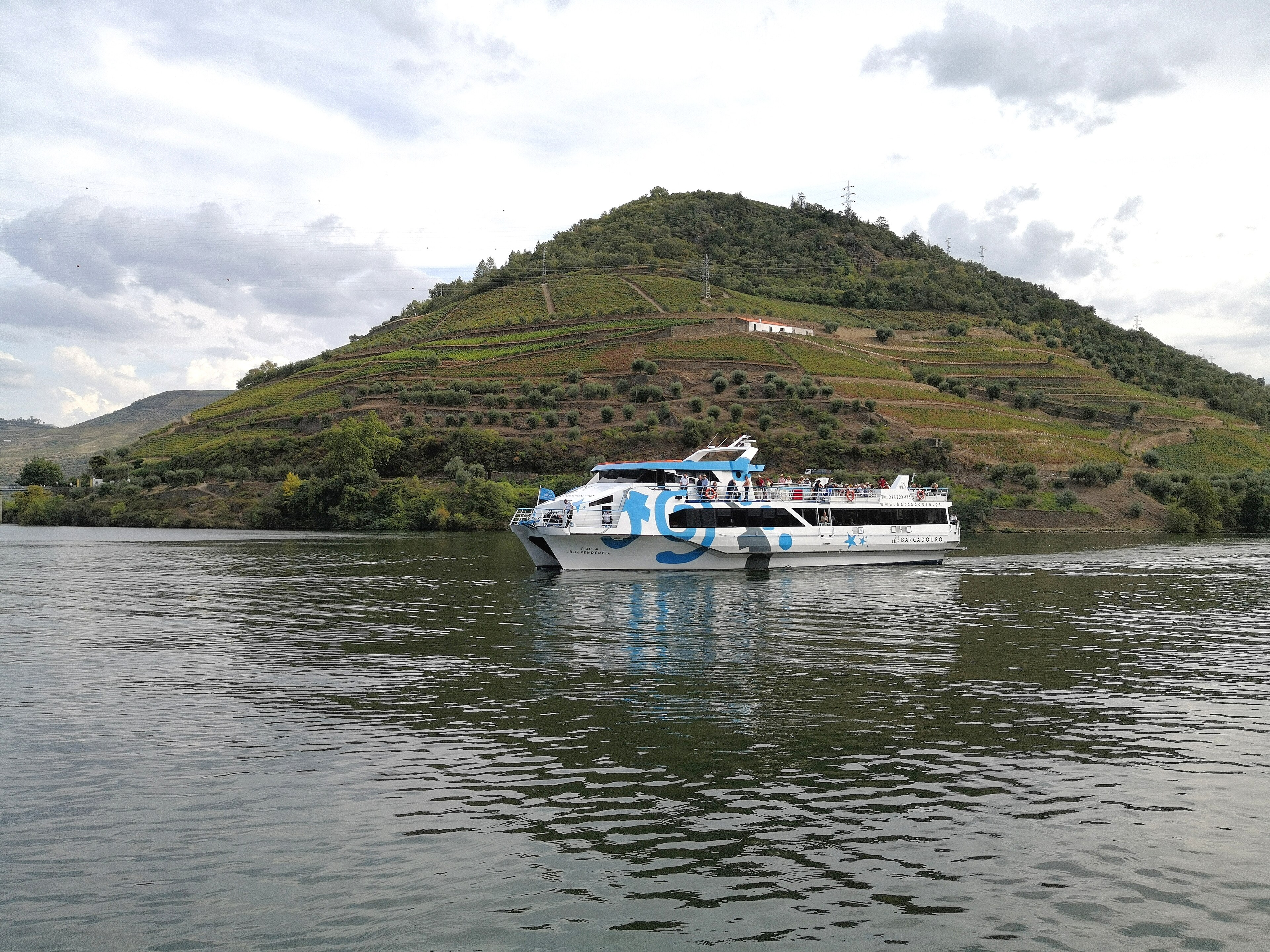
The river can become part of the itinerary rather than simply something you look at.
For a car-free traveler, that creates an appealing possibility:
Train into the valley. Explore on foot. Experience part of the landscape from the river.
You have covered less ground on a map.
But you may have experienced the Douro in a much more memorable way.
A short river trip can also provide a welcome change of perspective. From the water, the scale of the vineyard terraces and the steepness of the hillsides become much easier to appreciate.
What About Régua?
Peso da Régua is another important railway stop and historically one of the principal transportation centers of the Douro wine region.
Régua can make sense when your accommodations or planned experiences are nearby, or when it works better with a specific transfer or itinerary.
But don't choose Régua simply because it appears first on the railway line.
Choose your base according to what you intend to do once you arrive.
That is the same principle we use in our Where to Stay in the Douro Valley guide.
A Realistic Car-Free Day Trip From Porto
A car-free day trip works best when you deliberately keep the itinerary contained.
A good day might look something like this:
Morning: Take the train from Porto toward Pinhão.
Late morning: Arrive and spend some time exploring the station, waterfront and town.
Midday: Have one planned wine experience or a relaxed lunch.
Afternoon: Add a river experience or spend more time around Pinhão rather than arranging another long transfer.
Late afternoon or evening: Return to Porto by train.
Notice what is missing:
Three wineries.
Multiple viewpoints.
Two towns.
A complicated chain of taxis.
That is intentional.
A day trip gives you enough time to experience the Douro, but not necessarily enough time to travel extensively through it without a car.
If You Stay Overnight
An overnight stay changes the equation.
Instead of organizing everything around the return train to Porto, you can allow the valley to slow down.
Arrive by train.
Choose one meaningful afternoon experience.
Stay in Pinhão or arrange a transfer to a vineyard property.
Have dinner without worrying about driving.
Then enjoy another part of the valley the following morning before returning to Porto.
This is where a car-free Douro visit can become particularly appealing. What feels restrictive during a tightly scheduled day trip can feel wonderfully unhurried when spread across two days.
If you are still deciding how many nights to allocate between Porto and the valley, start with our guide to How Many Days in Porto & the Douro Valley?
And if you decide to stay overnight, our guide to Where to Stay in the Douro Valley explains the differences between Pinhão, a vineyard quinta and Régua.
What Becomes Harder Without a Car?
A car becomes more useful when your priority is exploration rather than concentration.
It makes it easier to reach remote quintas.
It makes spontaneous stops possible.
It gives you more freedom to seek out viewpoints and smaller villages.
And it allows you to change plans without coordinating another driver.
Those advantages are real.
But they come with their own tradeoffs.
Driving in the Douro often means narrow, winding roads, significant elevation changes and navigating unfamiliar routes through vineyard country.
And if wine tasting is central to your day, driving creates another obvious consideration.
A rental car provides freedom.
It is not automatically the best way to experience the valley.
Should You Rent a Car Just for the Douro?
Possibly—but only if the things you want to do require one.
If your imagined Douro trip involves driving between several estates, stopping at viewpoints and exploring smaller villages independently, a car may make the itinerary substantially easier.
If your imagined trip is:
scenic train + Pinhão + wine + lunch + river + overnight,
you may discover that renting a car adds very little.
Start with the experience.
Then decide whether the transportation is necessary.
Not the other way around.
Before You Book
A successful car-free Douro trip depends on coordinating a few things before you leave Porto.
Check the current train schedule. Do not build the day around an old timetable copied from a travel article.
Reserve important wine experiences. Particularly if you need the winery to arrange or recommend transportation.
Ask your hotel about transfers. A vineyard property may be geographically close to Pinhão while still being inconvenient to reach on foot.
Coordinate lunch with your itinerary. A long winery lunch can be one of the highlights of the day—but it is also part of the day's schedule.
Know how you are getting back. Confirm the return train or transfer before you start adding additional activities.
And most importantly:
Leave some room in the day.
The Douro rewards looking out the train window, sitting beside the river and lingering over lunch.
Those aren't gaps in the itinerary.
They are part of the reason to go.
The Bottom Line
You can absolutely visit the Douro Valley without a car.
The key is not trying to experience the valley exactly as someone with a car would.
Use the railway for what it does exceptionally well: bringing you from Porto into the heart of the Douro landscape. Use taxis, transfers or an organized tour when they genuinely improve the experience. Use the river when it gives you another perspective on the valley.
And don't measure the quality of the day by how many wineries or villages you managed to reach.
The train gets you into the Douro. Your itinerary determines whether you need a car once you're there.
Photo Credits
Douro Line near Pinhão — Daniel VILLAFRUELA, CC BY-SA 4.0, via Wikimedia Commons.
CP regional train at Pinhão railway station — Sanjorgepinho, CC BY-SA 4.0, via Wikimedia Commons.
Catamaran Independência on the Douro at Pinhão — Sanjorgepinho, CC BY-SA 4.0, via Wikimedia Commons.