PORTUGAL TRIP PLANNING
What Is Actually Worth Seeing in Évora?
How to Decide What Deserves Your Time in Portugal’s Historic Alentejo City
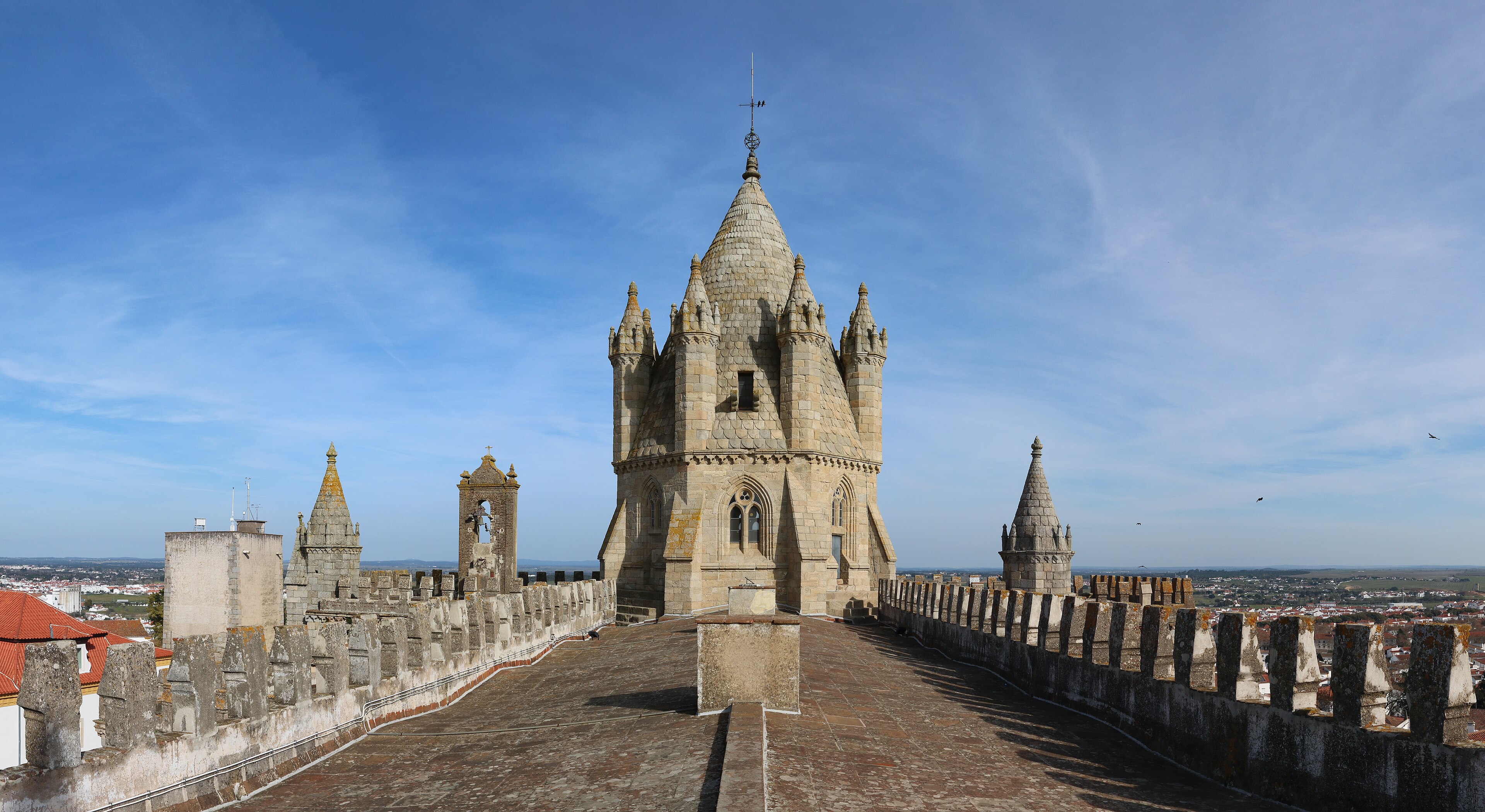
Évora has the kind of sightseeing list that can make a short visit feel deceptively simple.
Roman temple.
Cathedral.
Chapel of Bones.
Praça do Giraldo.
Churches, museums and historic streets.
Put them on a map and many of them appear close together.
That can make Évora look like a city you should be able to work through quickly.
But that is not necessarily the best way to experience it.
Évora is not simply a collection of preserved monuments. It is a historic city that is still being lived in.
The Roman ruins matter.
The churches matter.
The architecture matters.
But so do the streets connecting them.
The squares.
The cafés.
The moments when you stop looking for the next attraction and begin noticing the city around you.
So instead of asking:
How many of Évora’s sights can I fit into the day?
Ask:
If I have limited time in Évora, what will help me understand the city—not simply prove that I saw its famous sights?
The Short Answer
For a first visit, think about Évora in three layers.
Ancient Évora — Understand how old the city really is.
The Roman Temple is the clearest starting point.
Historic Évora — See the city Portugal built around those ancient foundations.
The Cathedral, churches and historic center reveal the city that developed over centuries around the Roman past.
Experienced Évora — Leave time for the city between the monuments.
Walk the streets. Spend time in Praça do Giraldo. Sit somewhere. Notice how the historic city works as a place rather than simply as a collection of attractions.
That gives you a useful framework:
The monuments explain Évora's history. The city between them is part of what makes Évora worth seeing.
Start With Ancient Évora
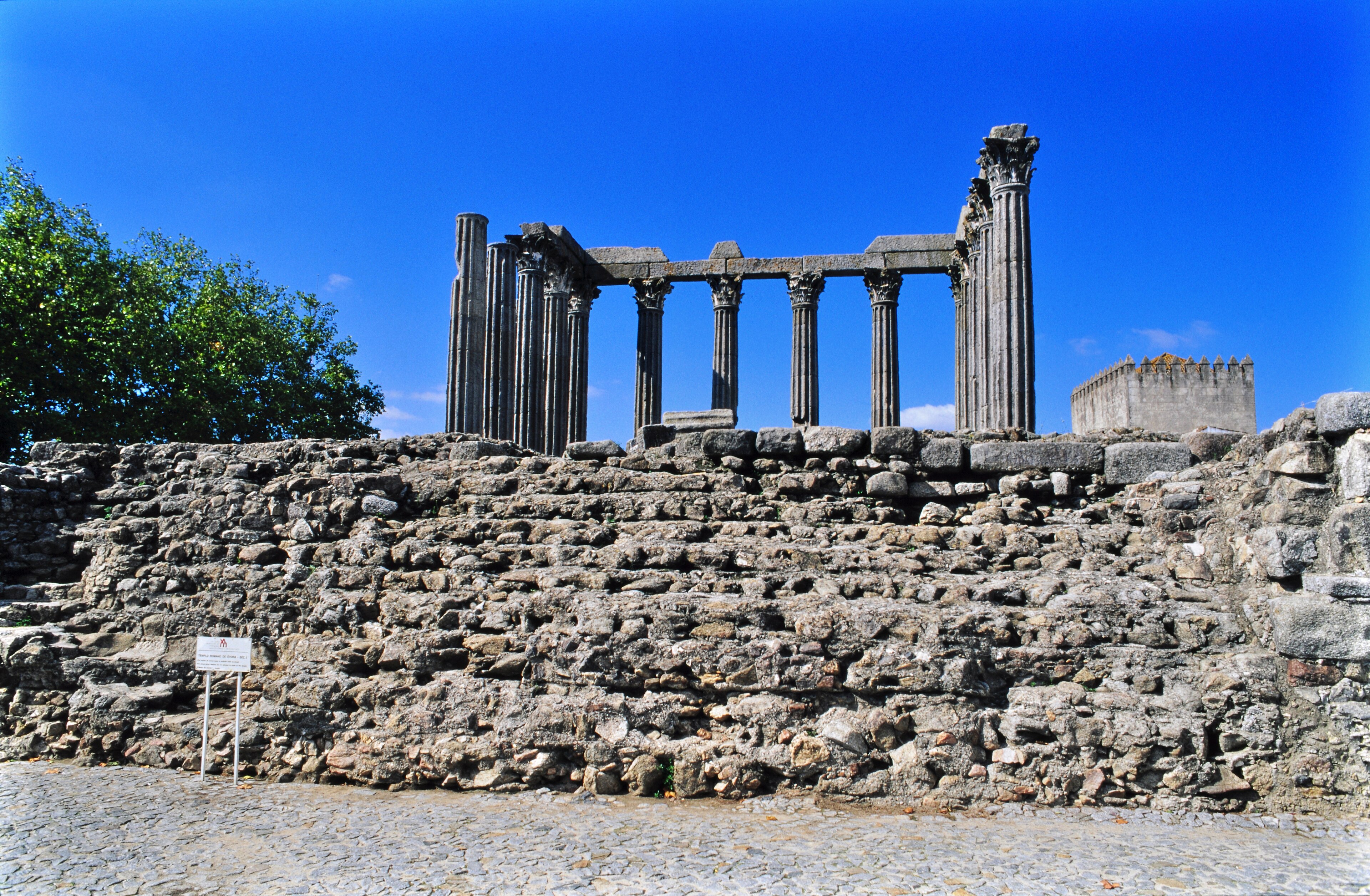
The Roman Temple is one of Évora's most recognizable landmarks.
More importantly, it immediately changes how you understand the city.
Évora's history did not begin with its cathedral, medieval streets or whitewashed buildings.
The Roman presence reminds you that people have been building, governing and living here for a very long time.
And the temple does something else especially well for a traveler with limited time.
It offers high significance without high time commitment.
You do not need to build an itinerary around it.
You can experience it as part of walking through the historic center.
That makes the Roman Temple easy to recommend—not simply because it is famous, but because it adds an important layer of understanding without requiring the day to revolve around it.
The Cathedral Helps Explain Historic Évora
From the Roman Temple, the Cathedral of Évora is a natural next layer.
Its scale changes the character of the city around it.
The cathedral is not simply another historic building to check off.
It helps show how Évora evolved long after the Roman period.
For many travelers, the building itself will be worthwhile.
But the experience can become more meaningful when you think about the cathedral in relation to the city around it.
Ancient Évora is still visible nearby.
Medieval and later Évora developed around it.
And the modern city continues to function within that historic setting.
That layering is one of the most interesting things about Évora.
What About the Chapel of Bones?
The Chapel of Bones is one of Évora's most unusual and widely known sights.
That makes it easy to assume it belongs automatically on every first-time itinerary.
It does not have to.
The chapel can be memorable, thought-provoking and unlike anything else you see in the city.
For some travelers, that makes it one of the experiences they will most remember from Évora.
For others, it may be less important than spending that time walking the historic center, visiting the Cathedral or simply allowing the city to unfold more slowly.
The useful distinction is this:
Historically important and essential for your visit are not always the same thing.
The Chapel of Bones deserves consideration.
It does not need to become an obligation.
Praça do Giraldo Is More Than a Landmark
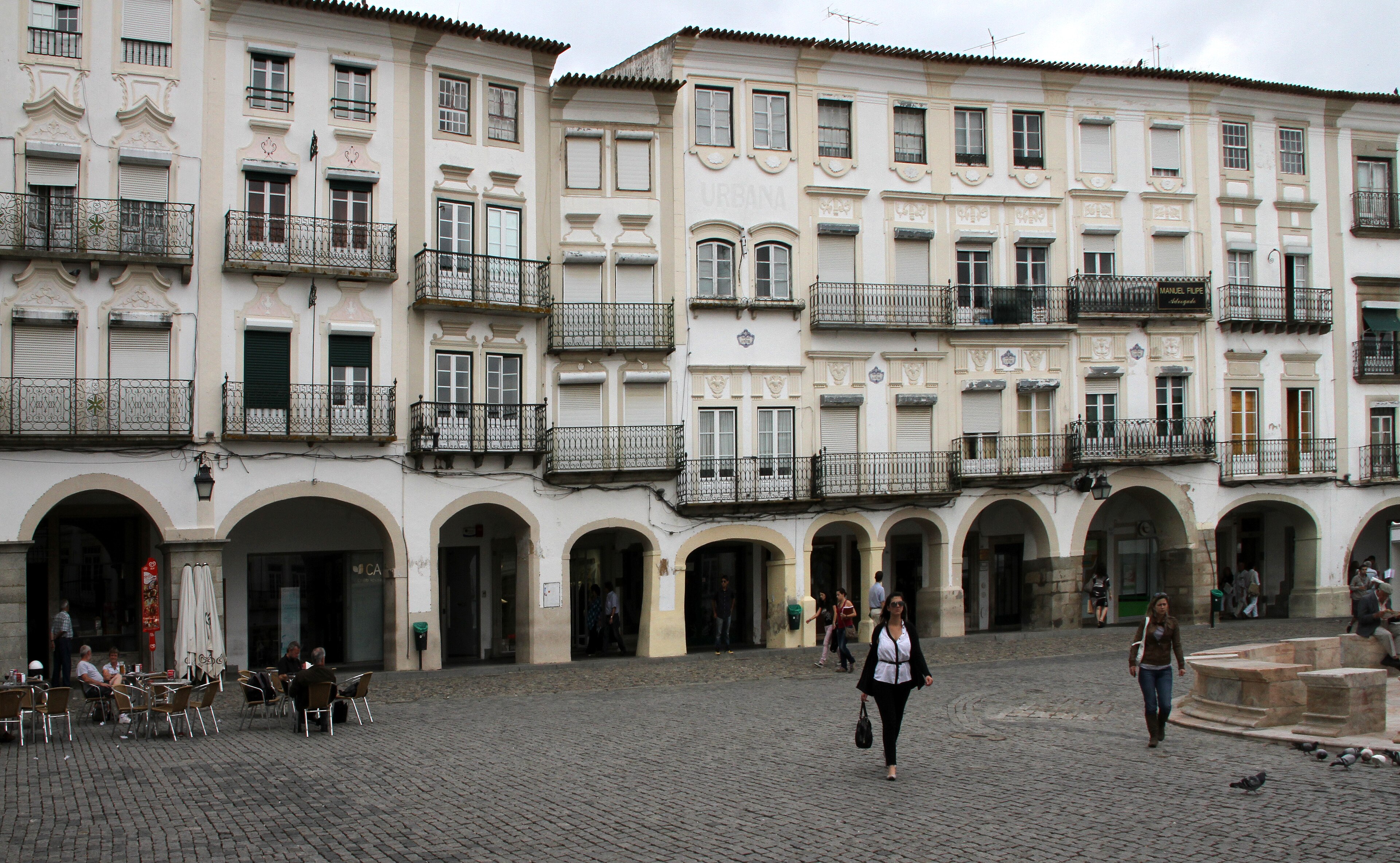
Praça do Giraldo is often described as Évora's central square.
That is accurate, but it does not fully explain why it matters to a visitor.
The square gives you somewhere to stop.
That sounds simple.
It can also be part of the experience.
Évora becomes easier to understand when you occasionally stop moving through it.
Sit at a café.
Watch people cross the square.
Notice the arcades and surrounding buildings.
Let the city become something you are spending time in rather than something you are trying to finish.
That is especially valuable if your visit is short.
You may see fewer things.
But you may remember Évora more clearly.
Sometimes Walking Is the Sight
Some cities reveal themselves primarily through major landmarks.
Évora is not one of them.
Walking between the Roman Temple, Cathedral, Praça do Giraldo and other historic sites is not simply transportation between attractions.
The streets themselves help explain the city.
Whitewashed buildings.
Narrow lanes.
Small squares.
Doorways, churches and pieces of architecture you may not have planned to see.
These moments are difficult to put on a sightseeing list.
They are also part of why Évora can reward travelers who do not schedule every minute.
What About the Churches, University and Museums?
Évora contains more historic and cultural sites than most first-time visitors need to include.
That is not a criticism of those places.
It is a reason to choose.
Additional churches can deepen the experience for travelers interested in religious architecture.
The university can add another layer for travelers interested in the city's intellectual and architectural history.
Museums can provide context that monuments alone cannot.
But adding more sites does not automatically create a better day.
Ask whether the next stop adds something you have not already experienced.
Important does not automatically mean essential to your trip.
If You Have Only Half a Day
Keep the visit focused.
The Roman Temple, Cathedral area, Praça do Giraldo and the streets connecting them can provide a meaningful introduction to Évora.
Add another major interior experience only if it genuinely matters to you.
The goal is not to move faster.
It is to make fewer decisions.
If You Have a Full Day
A full day gives Évora room to breathe.
You can experience the major historic layers of the city while still leaving time for lunch, wandering and an unplanned stop.
This is where the difference between seeing Évora and experiencing Évora becomes more noticeable.
You do not need to fill the additional hours with additional attractions.
Use some of the time to slow down.
If You Stay Overnight
Staying overnight changes the experience again.
Day visitors begin leaving.
The sightseeing pressure drops.
Dinner becomes part of the visit rather than something waiting at the end of the drive back to Lisbon.
The following morning can begin without needing to arrive anywhere first.
An overnight doesn't necessarily buy you more sightseeing. It buys you time around the sightseeing.
For some travelers, that may matter more than adding another monument.
What Can You Skip?
Potentially quite a lot.
Not because those places are unworthy.
Because a good trip requires choosing.
If you have already experienced the Roman Temple, Cathedral, historic streets and one or two places that genuinely interest you, another church or museum may not change your understanding of Évora very much.
The question becomes:
Will this help me understand or experience something about Évora that I haven't already experienced?
If the answer is yes, go.
If the answer is no, you may be better served by leaving the space open.
A Simple Way to Decide
Before building your Évora sightseeing list, choose one experience from each of these categories.
Ancient Évora
See something that reveals the city's oldest visible layer.
Historic Évora
Experience something that shows how the city developed through later centuries.
Experienced Évora
Leave time to walk, sit, eat or simply notice the city around you.
Once you have those three layers, anything else should earn its place.
The Bottom Line
Évora is worth seeing because several different periods of Portuguese history exist within a city that still feels lived in.
The Roman Temple helps explain how old the city is.
The Cathedral and historic center show what grew around those ancient foundations.
Praça do Giraldo and the streets between the monuments remind you that Évora is more than preserved history.
You do not need every church.
You do not need every museum.
You do not need to turn the day into a checklist.
You need enough of the city's different layers to understand why Évora matters.
So when deciding what deserves your time, ask:
Did I experience enough of Évora's different layers to understand why this city matters?
Photo Credits
Évora Cathedral roof and city view — Photo: Ingo Mehling / Wikimedia Commons / CC BY-SA 4.0
Roman Temple, Évora — Photo: pedrik / Wikimedia Commons / CC BY 2.0
Praça do Giraldo, Évora — Photo: Gerd Eichmann / Wikimedia Commons / CC BY-SA 4.0