PORTUGAL TRIP PLANNING
How to Experience the Alentejo Beyond Évora
How to Discover the Landscape, Towns and Experiences That Make Inland Portugal Different
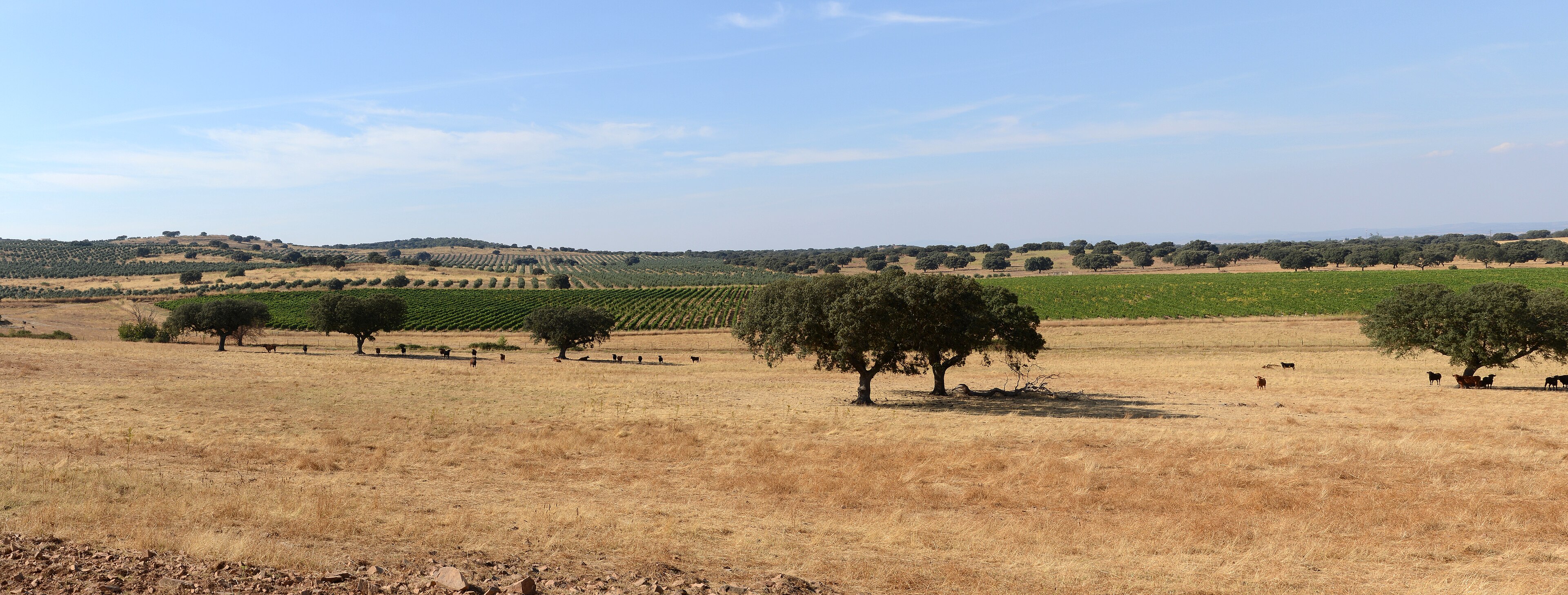
Évora can introduce you to the Alentejo.
But Évora is not the Alentejo.
Beyond the city's walls, the landscape opens. Cork oaks and olive trees appear across broad stretches of countryside. Vineyards occupy the land around small towns. Whitewashed villages rise above the plains. Ancient stones reveal that people were living here thousands of years before Roman Évora.
And distances begin to matter differently.
This is not a region that becomes more rewarding simply because you add more stops.
In fact, trying to see too much can work against the very thing that makes the Alentejo different.
The landscape isn't merely the space between attractions.
In the Alentejo, the journey between places isn't necessarily time between experiences. The landscape can be one of the experiences.
So instead of asking:
How much of the Alentejo can I cover?
Ask:
What would help me experience the Alentejo rather than simply drive through it?
The Short Answer
For a first experience beyond Évora, think about the Alentejo in three ways.
Experience the landscape.
Pay attention to the cork-oak countryside, olive trees, vineyards and open horizons. Learn what you're looking at rather than treating the landscape as scenery between destinations.
Choose a town.
You do not need a collection of villages. Choose somewhere that reveals another side of the region. For many first-time visitors, Monsaraz is an especially strong choice.
Choose an experience connected to the land.
Wine, regional food, cork, archaeology, Alqueva and even the night sky can take you deeper into the Alentejo without requiring you to travel everywhere.
The principle is simple:
The Alentejo isn't something you understand by collecting more stops. You begin to understand it when the landscape itself becomes part of the trip.
Start With the Landscape
The first mistake travelers can make in the Alentejo is treating the countryside as empty space.
It isn't.
The broad plains, cork-oak woodlands, olive groves and vineyards are part of the region's identity.
This is one reason the Alentejo works differently from a trip built around cities.
In a city, transportation often exists primarily to get you to the next experience.
Here, the movement through the landscape can become part of the experience itself.
That does not mean every road is scenic or that every drive needs to become an event.
It means you should leave enough room in the trip to notice where you are.
The Cork Oaks Are More Than Scenery
At some point while traveling through the Alentejo, you may begin noticing the trees.
Some stand individually across open land.
Others form woodland.
And some have trunks that look noticeably different—as though part of the bark has been removed.
Those are cork oaks.
And understanding what you're seeing changes the landscape.
Cork is not simply a Portuguese souvenir or the material in the top of a wine bottle. Cork production is deeply associated with the Alentejo, and the cork oak is one of the defining features of the region's working landscape.
The cork oak is part of a traditional landscape known as the montado, where cork and holm oaks coexist with agriculture and grazing.
That means the trees are doing more than making the countryside attractive.
They are part of a working landscape.
And that is exactly why cork belongs in an Alentejo experience.
You don't necessarily need to visit a cork factory or build an itinerary around cork.
You simply need to recognize that when you travel through these landscapes, you are looking at something that has helped shape the economy, culture and physical appearance of the region.
Sometimes understanding what you're looking at is an experience in itself.
Choose a Town Rather Than Collecting Villages
The Alentejo contains many towns and villages that could justify a stop.
That does not mean your trip improves each time you add one.
A better approach is to choose a place that adds something different from Évora.
For many first-time visitors, Monsaraz does that particularly well.
Why Monsaraz?
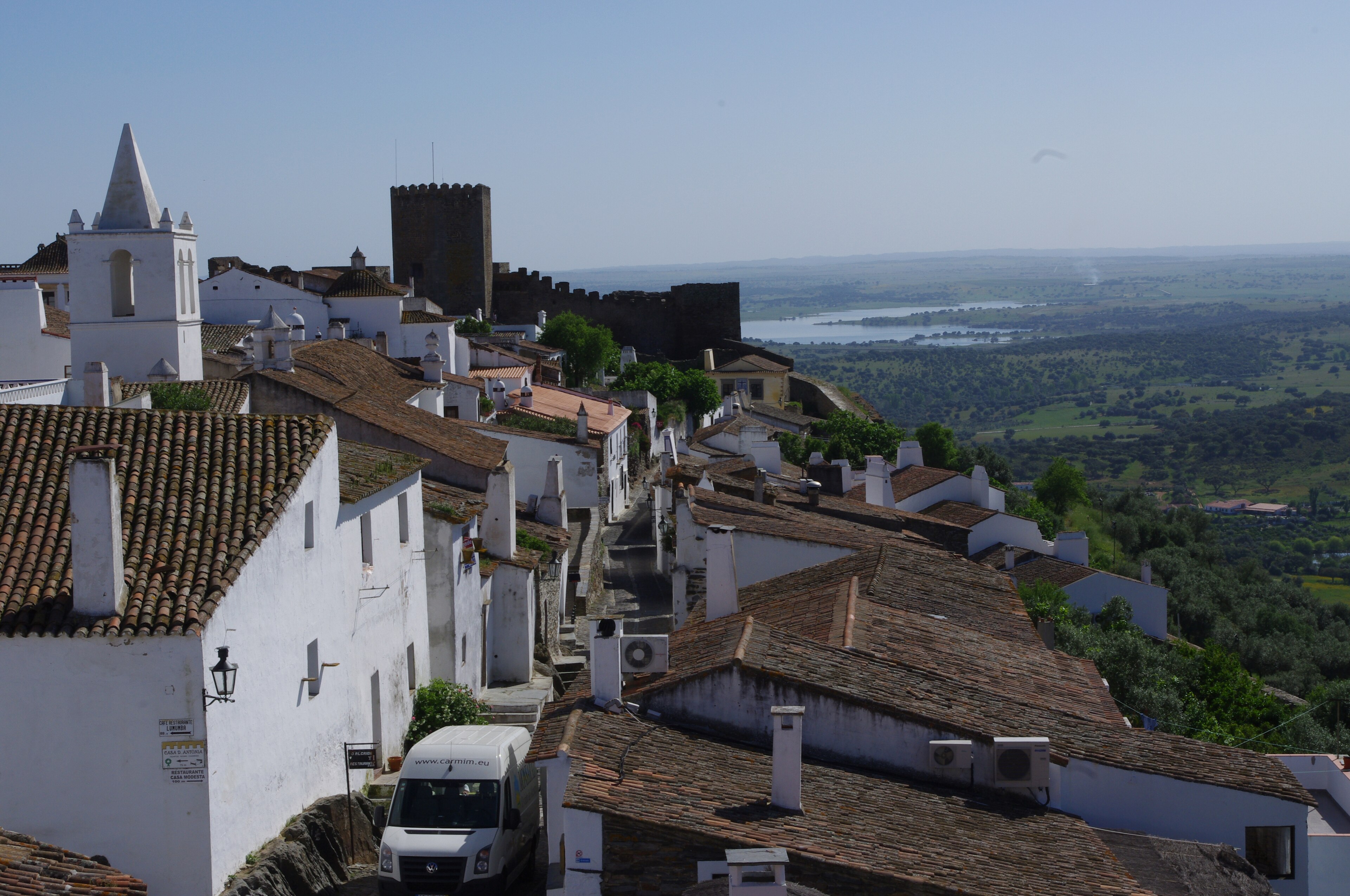
Monsaraz is a medieval hill town of whitewashed houses and stone, with a castle at one end and broad views across the surrounding countryside and Lake Alqueva.
Its historic character and setting connect the town with several different aspects of the Alentejo: landscape, wine, pottery, prehistoric heritage and Alqueva.
That combination matters.
Monsaraz doesn't simply give you another historic town after Évora.
It gives you a different relationship with the Alentejo.
Évora is a substantial historic city.
Monsaraz is smaller, elevated and closely connected visually to the land surrounding it.
Stand high in the village and much of what this guide is trying to explain becomes visible.
The town.
The plain.
The lake.
The distances.
The horizon.
You begin to see the region rather than simply another attraction.
Wine Can Be Part of the Landscape Story
Wine is one of the most obvious ways to connect a visit with the land.
But you do not need to turn the trip into a wine tour for wine to become meaningful.
A winery visit, tasting or meal can help connect what you have been seeing outside the car window with something produced from the landscape.
That is the useful role wine can play here.
It is not simply another activity.
It can help explain the place.
Food Can Do the Same Thing
Regional food can provide another connection between the landscape and the trip.
Instead of treating meals as gaps between sightseeing, allow at least one meal to become part of how you experience the Alentejo.
This does not require an elaborate food itinerary.
It requires enough time to sit down and notice that what appears on the table belongs to the region you have been traveling through.
Archaeology Reveals Another Alentejo
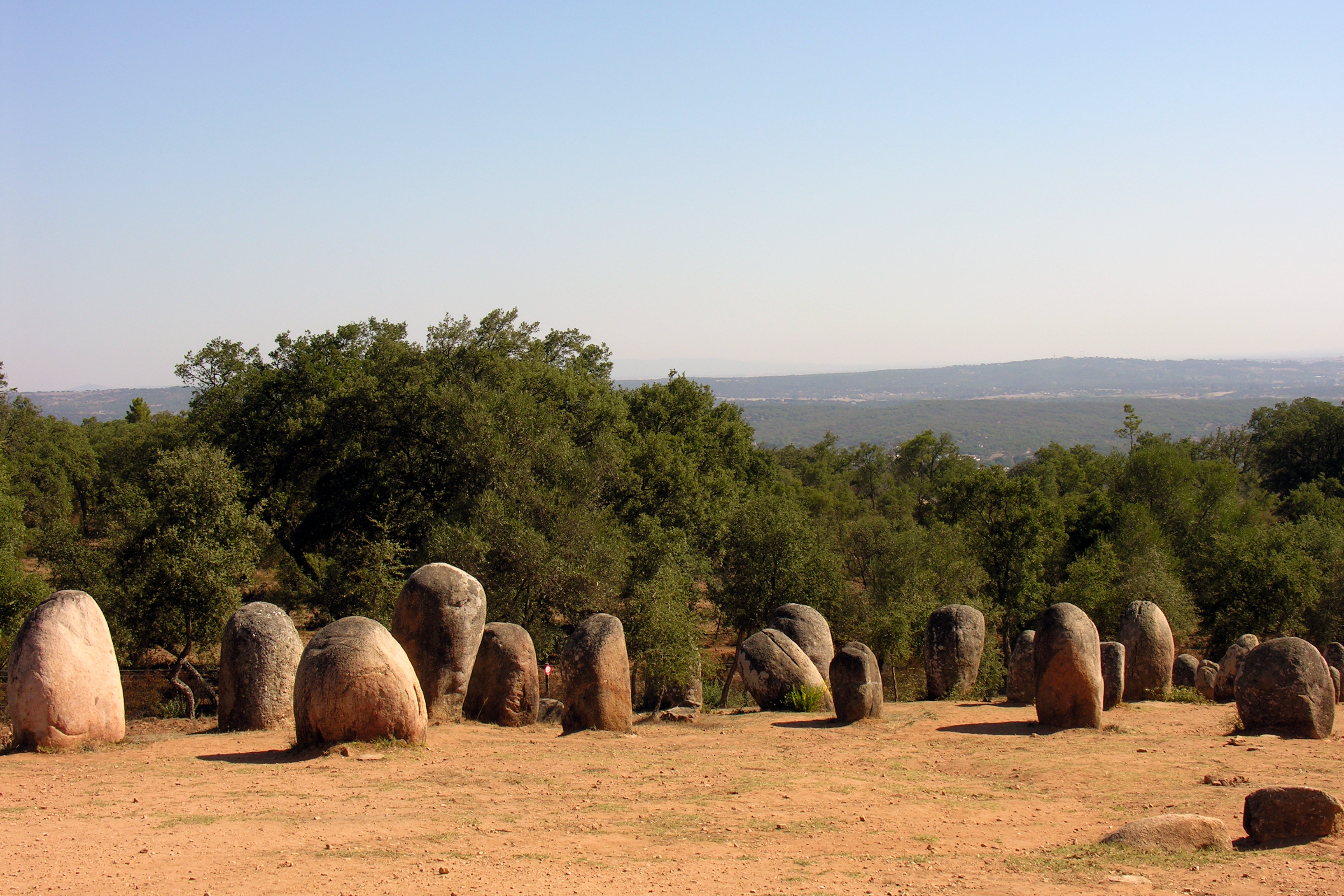
The Alentejo's history reaches much farther back than Roman Évora.
Prehistoric sites across the region reveal a human presence that can make even Évora's Roman ruins feel comparatively recent.
The Almendres Cromlech is one way to experience that deeper history.
The stones are meaningful not simply because they are old.
Their setting matters too.
Archaeology here can connect human history with the same landscape you have been traveling through.
For travelers interested in history, that can add a very different layer to the Alentejo experience.
For travelers who are not particularly interested in prehistoric sites, it does not need to become another obligation.
Choose it because that layer of the region interests you.
Alqueva Changes the Scale Again
Lake Alqueva introduces another kind of landscape.
Around Monsaraz, the water becomes part of the view and changes the visual character of the surrounding countryside.
For some travelers, simply seeing that landscape from Monsaraz may be enough.
Others may want the lake itself to become part of the experience.
The important thing is not to add Alqueva because it is another named place on the map.
Add it if the landscape, water or slower pace gives you something you actually want from the trip.
The Night Sky Can Be an Experience Too
The Alentejo does not stop being interesting when the sightseeing day ends.
Away from larger cities, the night sky can become another reason to slow down rather than immediately moving on.
This is especially relevant if your trip already includes an overnight outside Évora.
You do not necessarily need to build the entire evening around stargazing.
Sometimes the important decision is simply not to schedule over the evening.
Do You Need a Car?
Évora itself can be experienced without a car.
The Alentejo beyond Évora is different.
Once your trip begins connecting countryside, small towns, wineries, archaeological sites or Alqueva, a car becomes much more useful.
The reason is not simply distance.
It is flexibility.
A car makes it easier to choose a direction, stop where it makes sense and allow the landscape to become part of the day.
Without a car, the region can still be experienced, but transportation deserves more planning and your choices will be more limited.
If You Have One Extra Day Beyond Évora
Do not try to cover the Alentejo.
Choose one direction and one primary experience.
For many first-time visitors, Monsaraz and the Alqueva landscape create a strong combination.
The drive gives you the countryside.
Monsaraz gives you the town.
The surrounding landscape gives you room to understand where you are.
Add wine, food or another land-connected experience if it fits naturally.
Do not add three more towns simply because they are nearby.
If You Have Two Extra Days
The additional day should allow you to slow down rather than simply travel farther.
One day might center on a town and its surrounding landscape.
Another might center on an experience connected to the land—wine, food, cork, archaeology, Alqueva or another interest that gives the region more meaning.
This is where the Alentejo begins to reward restraint.
Fewer places, experienced better.
What About the Alentejo Coast?
The Alentejo also reaches the Atlantic.
But the coast creates a different travel experience from the inland Alentejo described here.
Trying to combine the inland countryside, Évora, hill towns and the coast into one short extension can turn a slow region into a driving exercise.
If the coast is important to your Portugal trip, it deserves to be considered as its own experience rather than automatically added to an inland Alentejo itinerary.
A Simple Way to Build the Experience
Start with three decisions.
1. Choose the landscape.
Give yourself enough time to notice the cork oaks, vineyards, olive trees, plains and changing countryside.
2. Choose a town.
Pick one place that adds something different from Évora rather than collecting villages.
3. Choose one experience connected to the land.
Wine, food, cork, archaeology, Alqueva or the night sky can each provide a different way into the region.
You do not need all of them.
Some of the Alentejo's best experiences aren't attractions at all.
The Bottom Line
Évora can show you the Alentejo's history.
But the countryside begins showing you something else.
The cork oaks reveal a working landscape.
The vineyards and food reveal what that landscape produces.
Monsaraz reveals the relationship between town and countryside.
The megalithic sites reveal how long people have inhabited this land.
Alqueva and its night sky reveal another scale entirely.
You don't need all of them.
You need enough time to notice what makes the region different.
So don't ask:
How much of the Alentejo can I fit into the trip?
Ask:
What would help me understand the Alentejo rather than simply pass through it?
Then build around that answer.
The Alentejo isn't something you understand by collecting more stops. You begin to understand it when the landscape itself becomes part of the trip.
Photo Credits
Alentejo countryside near Elvas — Photo: Alvesgaspar / Wikimedia Commons / CC BY-SA 3.0
Monsaraz — Photo: Ken & Nyetta / Wikimedia Commons / CC BY 2.0
Almendres Cromlech — Photo: Felicity and Phillip / Wikimedia Commons / CC BY 2.0